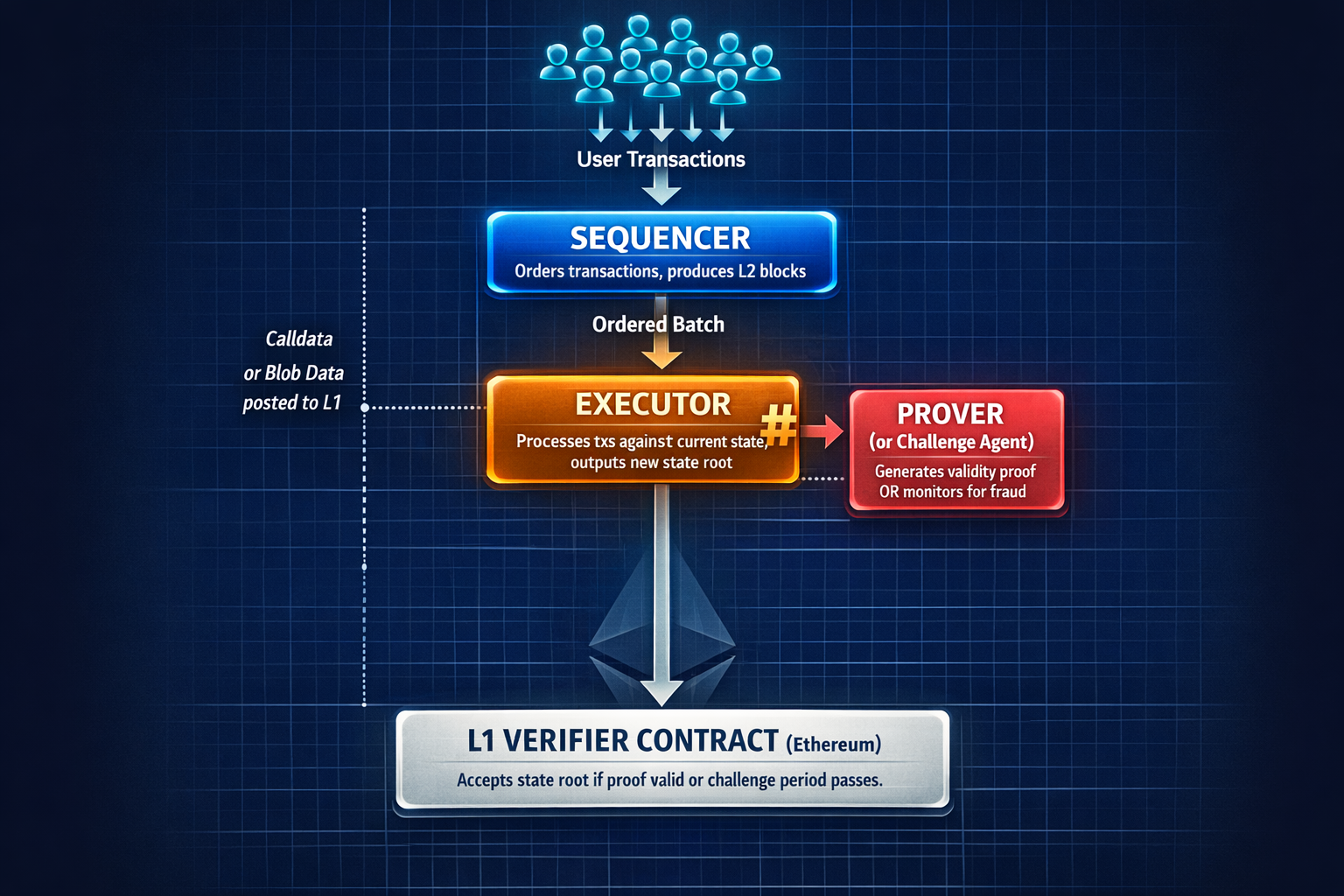
Layer 2 Scaling: Rollups, Fraud Proofs, ZK Proofs and the Sequencer Problem
Understand exactly where each major rollup sits on the decentralisation spectrum and why the proof type matters less than the full security stack. Aft…
Rollups, validiums, ZK proofs, and the L2 scaling landscape.

Understand exactly where each major rollup sits on the decentralisation spectrum and why the proof type matters less than the full security stack. Aft…

Explains the cryptographic mechanics behind STARK proofs and how StarkNet uses them to batch thousands of transactions into a single Ethereum proof. C…

Explains why blockchains are being broken into specialised layers instead of doing everything on one chain. Covers the four core functions, how modula…

How L2 bridges move value across trust boundaries, what each design concedes, and the specific failure modes that have cost billions. Written for read…

Polygon runs two separate chains with different security models. This guide explains what each one actually does under the hood and when to use which.

A complete walkthrough of zkSync Era's internal architecture — how transactions move, get proved, and settle on Ethereum. After reading, you'll unders…

Dissects Base's architecture, sequencer economics, fault proof status, and the real centralization surface area. For readers who want to reason about…

Technical breakdown of Arbitrum Nitro's WASM-based fraud proofs, sequencer design, and the differences from the original AVM.

How optimistic rollups (Arbitrum, Optimism) and ZK rollups (zkSync, Starknet, Scroll) differ in proofs, costs, and trust assumptions.
🌐 Powered by Doma Protocol
Build your own Web3 knowledge hub
Claim a subdomain on web3guides.com and publish your own guides — powered by Doma Protocol.